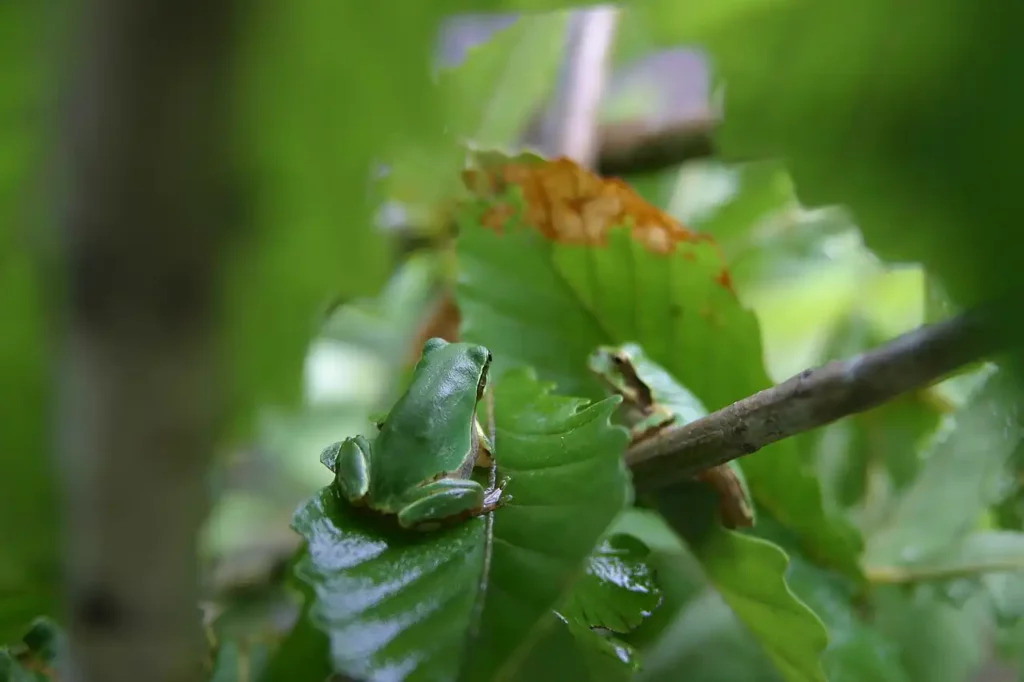
The intersection of evolutionary biology and oncology has recently yielded a discovery that challenges the conventional limits of cancer treatment. Researchers at the Japan Advanced Institute of Science and Technology (JAIST), led by Professor Eijiro Miyako, have identified a specific bacterium residing within the gut of the Japanese tree frog (Hyla japonica) that exhibits unprecedented tumor targeting and tumor killing capabilities. Published in the journal Gut Microbes in late 2025, the study details how this microbe, Ewingella americana, can eliminate solid tumors in mice with a single intravenous dose. This research does not simply offer a new drug candidate. It establishes a paradigm shift toward evolutionary immunotherapy, where the ancient survival mechanisms of cold-blooded vertebrates are harvested to solve the modern crisis of human malignancy.
The Biological Mystery of Amphibian Resilience
For decades, the field of comparative oncology has noted a curious anomaly. Amphibians and reptiles rarely develop spontaneous tumors. Even when they live in environments contaminated by heavy metals or industrial pollutants, their rates of malignancy remain significantly lower than those of mammals. This is particularly surprising given that amphibians undergo metamorphosis, a process requiring massive, rapid cellular proliferation and tissue remodeling. In humans, these are biological activities that often serve as precursors to cancer. Furthermore, many amphibians possess the ability to regenerate entire limbs. This feat necessitates the activation of many of the same signaling pathways that cancer cells hijack for growth.
Professor Miyako and his team hypothesized that this resilience might not be entirely intrinsic to the host genome. Instead, they looked toward the extended phenotype of the animal: its microbiome. They reasoned that the intestinal flora of these lower vertebrates, which has evolved over hundreds of millions of years in some of the most pathogen dense environments on Earth, might contain specialized organisms capable of suppressing abnormal cell growth.
To test this, the JAIST researchers conducted a massive screening of 45 bacterial strains isolated from the intestines of the Japanese tree frog, the Japanese fire belly newt (Cynops pyrrhogaster), and the Japanese grass lizard (Takydromus tachydromoides). Through systematic in vitro and in vivo testing, they narrowed the field to nine microbes with anti-tumor activity. One strain, Ewingella americana, demonstrated a level of potency that outstripped any previously known natural or engineered bacterial therapeutic.
The Dual Action Mechanism of Ewingella americana
The success of Ewingella americana is rooted in a two pronged attack strategy that current synthetic drugs struggle to emulate. Most cancer treatments either attempt to kill the cell directly via chemotherapy or try to help the immune system recognize the cancer via immunotherapy. This bacterium does both simultaneously.
The first phase of the attack is physical. As a facultative anaerobic bacterium, E. americana is uniquely adapted to thrive in low oxygen environments. Solid tumors are notorious for their hypoxic centers. Because they grow so quickly, they often outpace their blood supply, leaving the core of the tumor starved of oxygen. While this hypoxia makes tumors resistant to radiation and most chemotherapies, it acts as a homing signal for E. americana. Within 24 hours of a single intravenous injection, the bacterial count within the tumor increases by approximately 3,000 fold. The bacteria colonize the tumor core, physically disrupting its structure and secreting cytotoxic metabolites that cause widespread cell death.
The second phase is immunological. Tumors are often “cold,” meaning they create a suppressive microenvironment that prevents T cells and other immune defenders from entering or functioning. By invading the tumor, E. americana essentially warms the site. The presence of the bacteria triggers a massive influx of T cells, B cells, and neutrophils. This is not just a localized inflammatory response. The researchers found that the bacteria recruit immune cells that are specifically primed to recognize cancer antigens. In the study, mice treated with E. americana developed a long lasting immune memory. When these mice were later re-exposed to the same cancer cells, their immune systems recognized and destroyed them immediately, preventing any new tumors from forming.
Comparative Efficacy Against Standard Care
The most striking aspect of the JAIST study is how E. americana compared to existing standard of care treatments. In controlled trials using mice with colorectal cancer, the team compared the bacterium to anti-PD-L1 antibodies and doxorubicin.
While the anti-PD-L1 and doxorubicin groups showed moderate slowing of tumor growth, none achieved a complete response. In contrast, the group treated with a single dose of E. americana achieved a 100 percent complete response rate. The tumors did not just shrink; they disappeared entirely. This was achieved without the systemic toxicity typically associated with doxorubicin. The mice in the bacterial group maintained their body weight and showed no signs of organ damage, whereas the chemotherapy group suffered from classic side effects.
Safety evaluations revealed that E. americana has an unexpectedly short half-life in the bloodstream of approximately 1.2 hours. Within 24 hours of administration, the bacteria are completely undetectable in the blood and healthy organs like the liver, spleen, and kidneys. They only persist where they are most effective: inside the tumor.
Evolutionary Context and Amphibian Microbes
To understand why a frog gut bacterium is so effective against human-like cancer cells, one must look at the evolutionary history of amphibians. These animals are living fossils that have survived multiple mass extinctions. Their survival is contingent upon a robust innate immune system and a symbiotic relationship with microbes that can protect them from the diverse pathogens found in stagnant water and damp soil.
Amphibian skin and gut microbes produce an array of antimicrobial peptides and secondary metabolites. Some of these compounds have already been used in medicine. For example, magainins from the African clawed frog have been studied for their ability to kill bacteria and cancer cells by punching holes in their membranes. However, using the whole bacterium is a significant advancement. A live bacterium is a dynamic factory that can respond to the tumor’s changing environment, producing a cocktail of chemicals and physical stressors that a single peptide cannot match.
Furthermore, the leaky vascular system of tumors facilitates the accumulation of these bacteria. In the JAIST study, the researchers noted that the bacteria utilize the tumor’s own metabolic abnormalities, such as the secretion of specific metabolites, to support their rapid growth. Essentially, the tumor provides the perfect niche for the bacterium to thrive while it simultaneously destroys its host.
Safety Protocols and the Pathogenicity Paradox
One of the primary concerns with live bacterial therapy is the risk of infection. Ewingella americana is known in medical literature as an opportunistic pathogen, though it is extremely rare in humans. In the JAIST study, the researchers emphasized that the strain they isolated is a naturally occurring, non-pathogenic variant. Nevertheless, the idea of injecting bacteria into a cancer patient will undoubtedly face rigorous regulatory scrutiny.
To mitigate these risks, the team is exploring several safety measures. Because E. americana is sensitive to standard antibiotics, any runaway infection could theoretically be halted with a simple course of penicillin or tetracycline. Additionally, the researchers are looking at ways to further attenuate the bacteria. This involves genetically modifying them so they cannot survive outside the tumor environment at all.
However, Miyako argues that the natural state of the bacterium is part of its strength. Many previously attempted bacterial therapies used laboratory domesticated strains like E. coli or Salmonella, which often lost their aggressive tumor targeting abilities during the engineering process. By using a wild strain that has been perfected by millions of years of evolution in the gut of a frog, the researchers are tapping into a level of biological efficiency that human engineering cannot yet reach.
Future Directions for Bacterial Therapeutics
The initial success in colorectal cancer models has opened the door for a wider range of applications. The JAIST team is currently expanding their research to include cold tumors that are notoriously resistant to current treatments, such as pancreatic cancer, glioblastoma, and metastatic melanoma. These are cancers where the five year survival rate remains low, largely because the tumor is so effective at hiding from the immune system.
The researchers are also investigating the potential for combination therapies. While E. americana is powerful on its own, it may be even more effective when used alongside low dose radiation or specific metabolic inhibitors that could prime the tumor for bacterial invasion.
Another avenue of research involves the use of bacterial mimetics. If the specific metabolites or physical properties that allow E. americana to kill tumors can be identified and synthesized, it may be possible to create a cell-free version of the treatment. This would bypass many of the safety concerns associated with live bacteria while retaining the unique anti-tumor properties found in the frog gut.
Conclusion
As this research moves toward clinical trials, it serves as a reminder of the untapped medical potential of our planet’s biodiversity. The study of the non-human microbiome is a frontier that has been largely ignored in favor of human centric research.
The JAIST discovery is a call to preserve the natural world. If a common tree frog holds the key to curing one of humanity’s most devastating diseases, one must wonder what other cures are being lost as species go extinct. The frog gut breakthrough is more than just a scientific curiosity. It is a demonstration that the solutions to our most complex medical problems may already exist in nature, waiting to be discovered in the most unlikely of places.
The integration of this ancient biology into modern medicine represents the next wave of precision oncology. It is a future where the treatment is not a toxin, but a living partner. Through the work of JAIST and other pioneers in the field, the transition from killing the cancer to inviting the cure is finally beginning.
References and Sources
Iwata, S., et al. (2025). Discovery and characterization of antitumor gut microbiota from amphibians and reptiles: Ewingella americana as a novel therapeutic agent with dual cytotoxic and immunomodulatory properties. Gut Microbes. https://www.tandfonline.com/doi/full/10.1080/19490976.2025.2599562
Miyako, E., et al. (2025). Gut bacteria from amphibians and reptiles achieve complete tumor elimination. Japan Advanced Institute of Science and Technology (JAIST) Press Release. https://www.jaist.ac.jp/english/whatsnew/press/2025/11/04-1.html
Strauß, S., et al. (2025). Amphibian skin mucus as a potential weapon against multi-resistant bacteria and cancer. PLOS ONE. https://journals.plos.org/plosone/article?id=10.1371/journal.pone.0259956
Zhao, L., et al. (2023). Amphibian-Derived Natural Anticancer Peptides and Proteins: Mechanism of Action, Application Strategies, and Prospects. International Journal of Molecular Sciences. https://www.mdpi.com/1422-0067/24/10/8844
Thompson, B. (2025). Frog gut bacterium eliminates cancer tumors in mice with a single dose. New Atlas. https://newatlas.com/cancer/frog-reptile-microbes-cancer/
National Institutes of Health (2025). Microbial Therapeutics in Cancer: Translating Probiotics, Prebiotics, and Postbiotics. PubMed Central. https://pmc.ncbi.nlm.nih.gov/articles/PMC12551701/