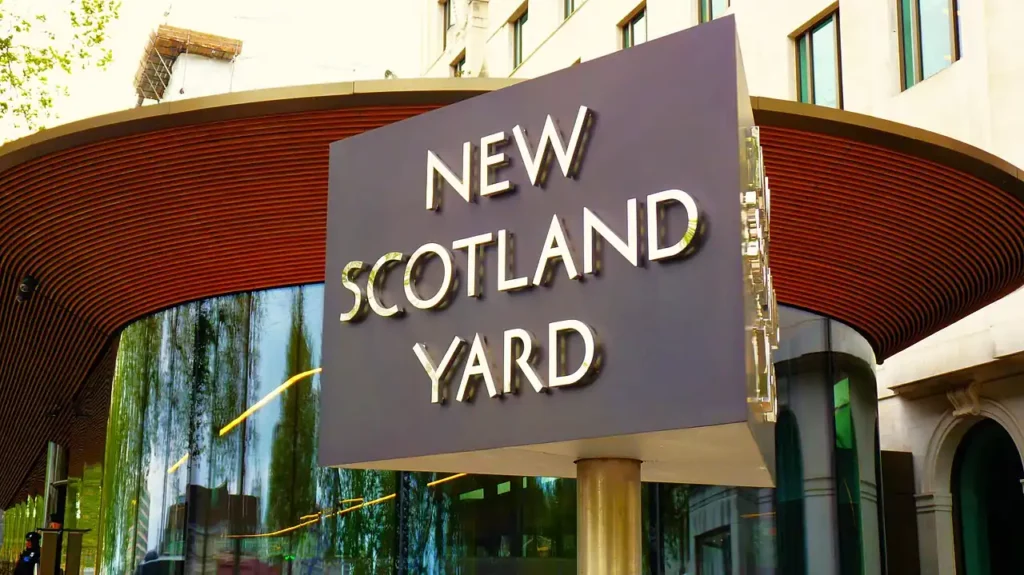
On December 11, 2025, a policy shift within Scotland Yard sent ripples through the legal and social fabric of London. The Metropolitan Police Service officially updated its handbook on declarable associations, mandating that every officer, detective, and staff member disclose membership in hierarchical organizations characterized by confidential memberships. While the language was broad, the target was specific. For the first time in nearly two decades, Freemasonry was placed under the direct scrutiny of police vetting units.
The reaction was swift. Six days later, on December 17, the United Grand Lodge of England issued a letter before claim. This document is the legal equivalent of a warning shot across the bow, notifying Commissioner Sir Mark Rowley that a judicial review is imminent unless the policy is suspended. This is not merely a dispute over paperwork. It is a fundamental conflict between a state institution’s mandate for transparency and an individual’s right to private association.
The Ghost of Daniel Morgan and the Burden of the Past
To understand why the Metropolitan Police is taking this step in 2025, one must look back nearly forty years to a south London pub car park. The 1987 murder of private investigator Daniel Morgan is often cited as the most investigated unsolved murder in British history. For decades, the case was stalled by allegations of police collusion and corruption.
When the Daniel Morgan Independent Panel finally released its findings in 2021, the report was a searing indictment of the Metropolitan Police. It introduced the term institutional corruption into the public record. A recurring theme in the testimony was the perceived influence of Freemasonry. Witnesses and investigators alike expressed a belief that masonic bonds between suspects and high ranking officers had hampered the pursuit of justice.
While the panel did not find a smoking gun of masonic conspiracy, it concluded that the secrecy surrounding the organization created a permanent cloud of suspicion. For Commissioner Sir Mark Rowley, who inherited a force reeling from the Baroness Casey Review and a series of high profile scandals, addressing the masonic question became a symbolic necessity. The argument from the professional standards department is simple. In a modern police force, there can be no room for secret loyalties that the public might perceive as a conflict of interest.
The Legal Threshold of Declarable Associations
The Metropolitan Police currently maintains a list of associations that officers must declare. These typically include groups with extremist ideologies, criminal links, or political affiliations that could compromise impartiality. By adding Freemasonry to this list, the force is treating a centuries old charitable fraternity as a potential risk factor for corruption.
Commander Simon Messinger, leading the policy rollout, has stated that the move is driven by the necessity of public trust. The force points to an internal consultation where two thirds of staff suggested that membership in such organizations affects how the public views police impartiality. From the Met’s perspective, this is a matter of administrative vetting. If an officer belongs to a group that requires a vow of mutual support, that fact should be known to the force so that conflicts can be managed transparently.
The Grand Lodge Strikes Back: Privacy and Association
The United Grand Lodge of England, based at the imposing Freemasons Hall in Covent Garden, views the matter very differently. Their legal challenge rests on the argument that the Met is overstepping its legal authority and violating the human rights of its officers.
The primary legal pillar of the challenge is Article 8 of the European Convention on Human Rights, which guarantees the right to a private and family life. The Lodge argues that an individual’s membership in a private club, particularly one focused on charity and personal development, falls squarely within the realm of private life. Unless the police can prove that such membership has directly resulted in misconduct, they argue that the state has no business demanding a registry of members.
Furthermore, the challenge invokes Article 11, the freedom of assembly and association. The United Grand Lodge of England contends that by forcing disclosure, the Met is effectively creating a blacklist. They argue that officers who declare their membership may face stalled promotions or unfair scrutiny from colleagues, creating a chilling effect on the right to associate with whom one chooses.
The GDPR Battleground: Special Category Data
A secondary but equally potent legal argument involves the UK General Data Protection Regulation. Under the law, certain types of personal data are classified as special category data, which requires a much higher level of protection. This includes data revealing religious or philosophical beliefs.
Freemasonry requires its members to profess a belief in a supreme being. Consequently, the Lodge argues that membership status constitutes a proxy for religious or philosophical belief. If the High Court agrees with this assessment, the Metropolitan Police would have to meet an incredibly high legal burden to justify the mandatory collection of this data. They would have to prove that the collection is strictly necessary for reasons of substantial public interest. The Lodge argues that with only 440 known masons in a force of 32,000, the Met’s actions are a disproportionate response to a statistically insignificant issue.
A Comparative Analysis of Organizational Influence
The Metropolitan Police Federation has raised questions about the consistency of this policy. If the goal is to prevent hierarchical organizations from influencing police work, critics ask why the policy stops at Freemasonry. Organizations such as the Opus Dei, certain exclusive sports clubs, or even high level military veteran networks also involve hierarchical structures and vows of mutual support.
The United Grand Lodge of England argues that singling out their organization is a form of direct discrimination. They suggest that the Met is acting on historical prejudice rather than modern evidence. Adrian Marsh, the Grand Secretary, has pointed out that Freemasons have served in every major conflict and public emergency in London’s history with distinction. To suggest that their membership now makes them a liability is, in the eyes of the Lodge, an insult to their service.
The Sociological Impact on Policing Culture
Beyond the legal technicalities, this case touches on the shifting culture of British policing. In the mid twentieth century, masonic lodges were a common feature of police social life. They provided a support network in a high stress profession. However, as the workforce has become more diverse and the public more skeptical of traditional institutions, these closed networks have come to be viewed as exclusionary.
Sociologists studying police behavior often point to the blue wall of silence, a culture where officers protect one another from internal investigation. The Met’s professional standards unit argues that fraternal organizations can inadvertently strengthen this wall. By requiring disclosure, the force hopes to dissolve the perception of shadow networks operating within the official command structure.
Precedent and the European Court of Human Rights
The legal teams for the United Grand Lodge of England are likely to lean heavily on the 2007 case of Grande Oriente d’Italia di Palazzo Giustiniani v. Italy. In that instance, the European Court of Human Rights ruled that an Italian law requiring candidates for high public office to declare they were not Freemasons was a violation of the freedom of association.
While the Met’s policy is a requirement to declare rather than a ban on membership, the Lodge will argue that the negative professional consequences of declaration constitute a de facto restriction. The High Court will have to decide if the specific context of British policing, and the unique history of the Daniel Morgan case, provides enough justification to deviate from the spirit of the 2007 European ruling.
The Judicial Review Process and the Road Ahead
The letter before claim is currently being reviewed by the Metropolitan Police legal directorate. They have a set period to respond before the Lodge can formally apply to the High Court for a judicial review. If the court grants permission, the case will likely become one of the most significant administrative law trials of the decade.
A judicial review is not a trial to determine if Freemasonry is good or bad. Instead, it is a review of the lawfulness of the decision making process used by Commissioner Sir Mark Rowley. The judge will look at whether the Met followed a fair consultation process, whether they considered all relevant evidence, and whether the final decision was rational and proportionate.
The outcome will be watched closely by other police forces across the United Kingdom. If the Met is successful, it is highly likely that forces in Greater Manchester, the West Midlands, and Scotland will follow suit. If the Lodge wins, it will reinforce the privacy rights of all public sector workers, potentially limiting the ability of employers to monitor the private affiliations of their staff.
Conclusion
The 2025 standoff between the Metropolitan Police and the United Grand Lodge of England represents the latest chapter in a long history of institutional suspicion and the quest for transparency. It pits the modern values of a reformed police force against the traditional rights of a private association. As the case moves toward the High Court, it serves as a reminder that the boundary between public duty and private life remains one of the most contested territories in British law. Whether through a handshake or a court order, the resolution of this conflict will shape the standards of police accountability for years to come.
References and Sources
United Grand Lodge of England. (2025). Formal Statement on Legal Action Against Metropolitan Police Disclosure Policy. Available at: https://www.ugle.org.uk/media-centre/press-releases
Metropolitan Police Service. (2025). Professional Standards Update: Declarable Associations and Hierarchical Organizations. Available at: https://news.met.police.uk/professional-standards
The Guardian. (2025). Freemasons launch legal challenge over Metropolitan police’s disclosure rule. Available at: https://www.theguardian.com/uk-news/2025/dec/17/freemasons-launch-legal-challenge-over-metropolitan-polices-disclosure-rule
Home Office. (2021). The Report of the Daniel Morgan Independent Panel. Available at: https://www.gov.uk/government/publications/daniel-morgan-independent-panel-report
European Court of Human Rights. (2007). Case of Grande Oriente d’Italia di Palazzo Giustiniani v. Italy (Application no. 11043/02). Available at: https://hudoc.echr.coe.int/eng
Information Commissioner’s Office. (2024). Guide to the General Data Protection Regulation: Special Category Data. Available at: https://ico.org.uk/for-organisations/guide-to-data-protection