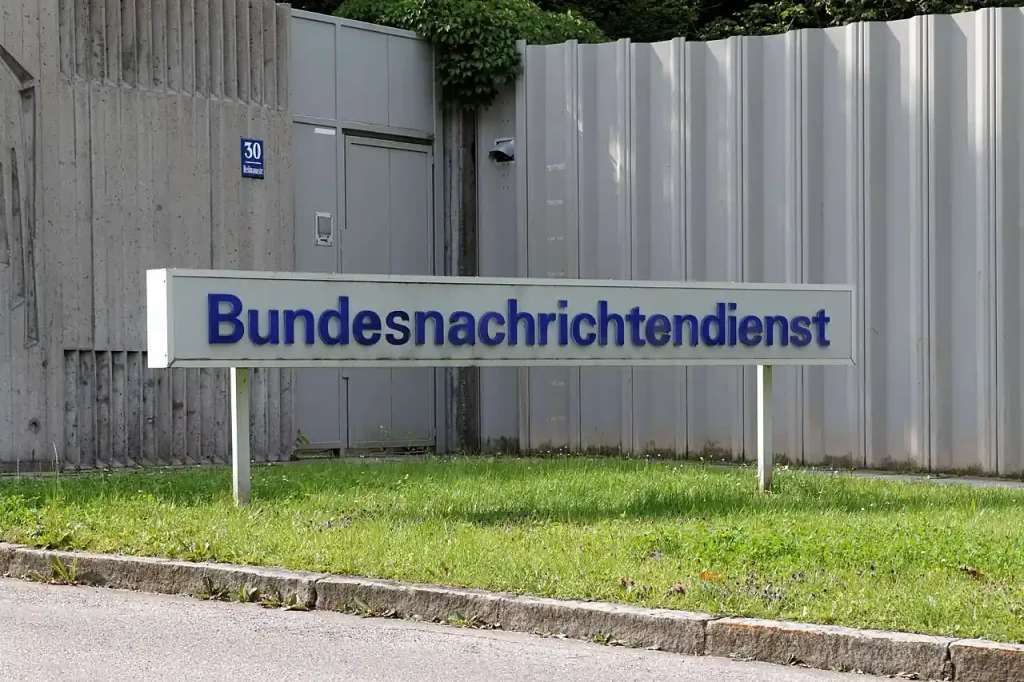
The arrest of August Hanning, who served as President of Germany’s foreign intelligence service, the Bundesnachrichtendienst (BND), from 1998 to 2005 and later as State Secretary in the Federal Ministry of the Interior, represents a major development in post-war European counter-espionage proceedings. Federal prosecutors in Karlsruhe have initiated formal criminal proceedings against Hanning alongside a second suspect, identified under German privacy standards as Manfred D., who served as chief of staff within the agency across multiple presidential tenures.
The charges outlined by the Federal Prosecutor’s Office include allegations of attempted treason, treasonous espionage, and the unauthorized handling of state secrets. Under German constitutional principles, both individuals are presumed innocent unless proven guilty in a court of law.
This legal proceeding raises critical questions regarding internal administrative controls, executive oversight, and the handling of sensitive security documentation within Western intelligence structures.
Career Trajectory of August Hanning in German State Service
To contextualize the ongoing judicial process, it is necessary to examine Hanning’s decades-long public record within the federal civil service. Trained as a legal scholar, Hanning built an extensive administrative career within the Federal Chancellery during the late 1980s and 1990s, specializing in institutional coordination, administrative reform, and security policy.
In December 1998, during the administration of Chancellor Gerhard Schröder, Hanning was appointed President of the BND. His seven-year presidency covered a transformative era characterized by major international counter-terrorism shifts, multilateral intelligence re-evaluations following September 11, 2001, and preliminary planning for the agency’s headquarters relocation from Pullach to Berlin.
Following his departure from the foreign intelligence agency in late 2005, Hanning was elevated to State Secretary in the Federal Ministry of the Interior under Minister Wolfgang Schäuble. In this executive post, which he held until his retirement from public service in 2009, his mandate encompassed statutory oversight across federal law enforcement bodies, border security architectures, and domestic intelligence mechanisms.
After concluding his official government tenure, Hanning established a commercial advisory firm offering geopolitical risk assessments and strategic consulting services to private clients and institutional entities.
Framework of Allegations and Institutional Continuity
The investigative thesis developed by the Federal Prosecutor’s Office centers on the long-standing professional association between Hanning and Manfred D., who remained employed within the intelligence agency well beyond Hanning’s departure.
According to official investigative summaries, Manfred D. held high-level administrative functions, including serving as chief of staff to successive agency heads from March 2012 through March 2026. Prosecutors contend that this continuous operational positioning granted him routine access to internal briefing materials, analytical summaries, and executive documentation intended solely for internal government evaluation.
The indictment alleges that Manfred D. systematically gathered internal BND records—totaling approximately 2,000 documents over an extended timeframe—and transferred portions of these files to Hanning in exchange for recurring payments. Federal investigators are systematically examining financial records to verify the financial parameters of these alleged transactions.
The prosecution further alleges that on at least one occasion, Hanning utilized classified intelligence findings to draft a strategic analysis intended for an officer of a foreign intelligence service. Authorities have noted that judicial inquiries remain ongoing to confirm whether any drafted materials successfully reached external recipients.
Scope of Classified Documentation Under Judicial Review
The material seized during search operations reportedly spans several critical domains of international security policy. While federal authorities have declined to publicly identify specific foreign nations or entities under review, official statements indicate that the documents cover executive briefing books compiled for internal governance meetings and Chancellery sessions.
Reports also indicate that the cache included high-level strategic and operational evaluations regarding international security developments, military logistics, foreign nuclear programs, and combined insights from domestic and foreign partner security organs.
Investigators are systematically reviewing these records to determine whether any information originated from partner agencies or if sensitive operational methods were compromised.
Origins of the Judicial Inquiry
The pathway to the current legal actions emerged not from routine internal auditing, but through secondary discoveries made during separate law enforcement proceedings.
In September 2025, Hamburg authorities initiated search procedures in connection with an unrelated civil and corporate inquiry involving private security contractors and a high-profile custody dispute involving Christina Block. During the execution of search warrants on commercial and private premises associated with consulting networks, law enforcement personnel encountered an electronic data storage device containing classified state records.
Recognizing the potential national security implications of these findings, the Federal Prosecutor’s Office in Karlsruhe assumed primary jurisdiction in May 2026. Subsequent investigative measures, including targeted financial and documentary audits, culminated in simultaneous search operations and arrests across Bavaria, North Rhine-Westphalia, and Berlin.
Procedural Next Steps and Statutory Standards
The prosecution of former senior officials under German national security statutes requires specialized judicial handling to reconcile public trial transparency with the protection of state secrets.
German criminal law establishes distinct legal thresholds for allegations of treason, espionage, and the unauthorized handling of classified information. The court will be required to independently verify the classified status of the seized documents, assess the extent of any actual or intended dissemination, and determine whether specific actions constituted a breach of statutory duties under federal law.
As pre-trial proceedings advance in Karlsruhe, the case presents complex evidentiary questions regarding document retention, consultatorial boundaries, and the long-term management of executive security clearances following retirement from public service.