Category: Technology
How Micro‑Nuclear and Small Modular Reactors Are Shaping the Future of Data Center Power
Hollow-Core Fiber: The Breakthrough Technology Accelerating Global Data Networks

Hollow-core optical fiber is poised to transform global telecommunications. By guiding light through air instead of glass, this breakthrough technology reduces latency, increases data transmission speed, and lowers signal loss. Major tech companies like Microsoft are already deploying hollow-core fiber to enhance AI data centers and high-speed networks.


Who Really Invented Convolutional Neural Networks? The History of the Technology That Transformed AI
From Supercomputers to Smartphones: How Linux Became the Backbone of Modern Technology

From powering the world’s fastest supercomputers to running the smartphones in our pockets, Linux has quietly become the backbone of modern technology. This article explores how an open-source passion project grew into a global powerhouse; shaping innovation across servers, devices, and entire industries.
Compiler.next and the Dawn of AI‑Native Software Engineering
Compiler.next represents a new era in software engineering, where AI collaborates directly with developers to generate code from high-level intent. Unlike traditional compilers, it uses search-based synthesis, iterative refinement, and dynamic testing to produce reliable programs.
GPU Depreciation Exposed: A Hidden Threat to AI Economics

GPU depreciation is a hidden threat in AI economics, quietly impacting profits, investments, and the cost of AI infrastructure. This article explores the debate over depreciation schedules, hardware lifespan, and economic risk, helping investors and companies understand the financial realities behind AI hardware deployment.
Unmasking a Shadowy Surveillance Empire: How Secret Tech Tracks World Leaders, Journalists, and Individuals
Three Scenarios That Could Shape Bitcoin’s Path to One Million Dollars

Bitcoin has always inspired bold predictions. From early adopters who viewed it as a revolutionary form of money to institutional investors who see it as digital gold, debate over its ultimate value remains fierce. As of now, Bitcoin trades in the low six figures, far from the million-dollar price targets long promised by its most devoted believers.
Steam Just Made Its Game Pages Wider. Here’s Why It Matters
What Past Education Technology Failures Can Teach Us About the Future of AI In Schools

American technologists have long urged schools to rapidly adopt new inventions, many of which failed to deliver lasting benefits. Examples include film strips replacing textbooks, mobile phones in classrooms, and early internet-connected classrooms; none of which reliably improved student learning or outcomes.
The Lost Tape: Unearthing Unix’s Forgotten Fourth Edition
Starting November 3, 2025, LinkedIn Will Use User Data by Default to Train AI

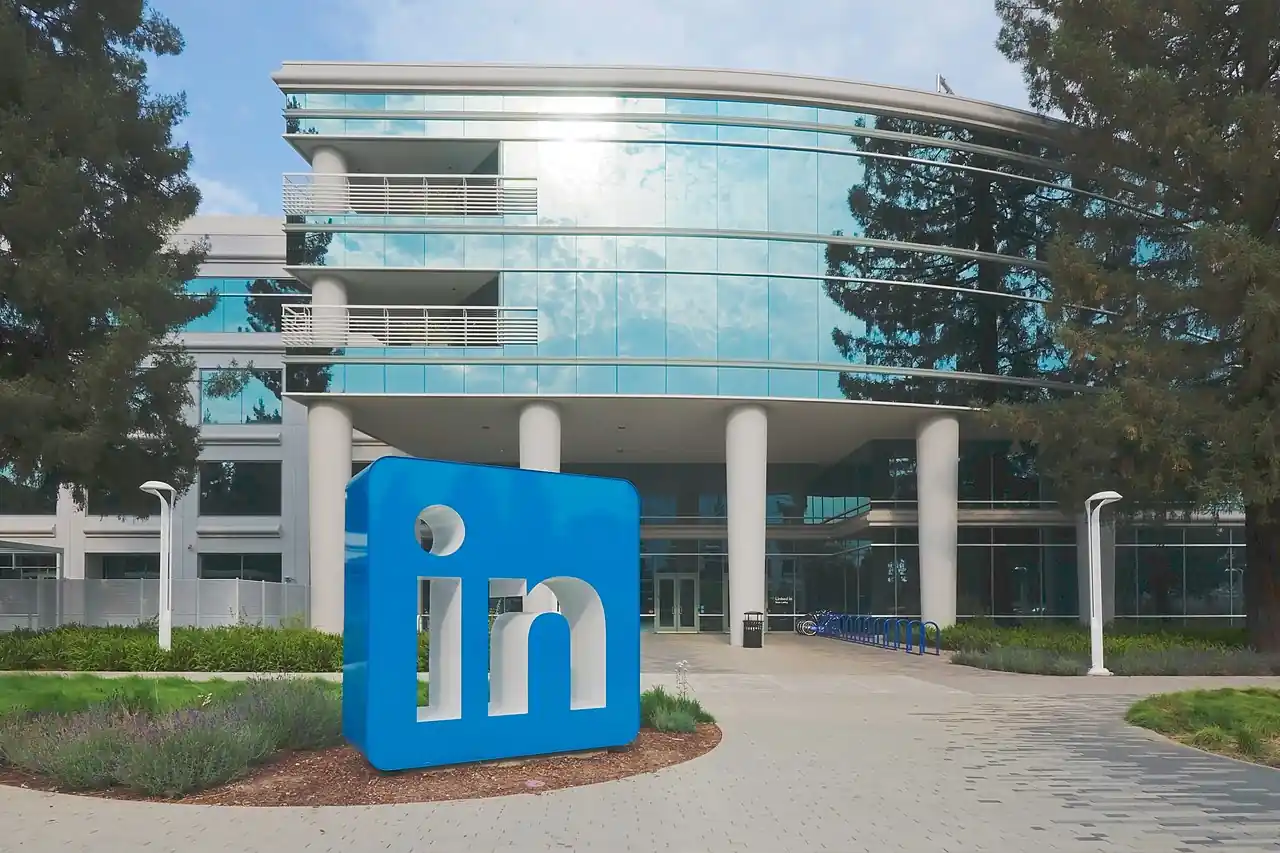
LinkedIn will begin using public user data by default to train its artificial intelligence models starting November 3, 2025. This update affects information shared on profiles and posts, with an opt-out option available. The change aims to improve AI-driven features while raising important questions about privacy and consent.
Mojo: Can It Finally Give Python the Speed of Systems Languages?
Mojo is an emerging programming language designed to combine Python’s ease of use with the performance of systems languages like C++. Targeted at AI and high-performance computing, Mojo offers optional static typing, low-level control, and seamless Python interoperability. This article explores Mojo’s design, performance potential, current challenges, and what it could mean for the future of programming.
China’s Breakthrough 6G Chip Could Redefine Wireless Communication
6G Technology: Emerging Innovations and the Race for Standard Essential Patents
The global rollout of 5G networks is already reshaping telecommunications by delivering faster speeds, lower latency, and connecting countless devices. Yet, as 5G continues to mature, attention is quickly shifting to the next frontier: 6G.
Rust vs. C: A Deep Dive Into Two Systems Programming Giants
Rust and C are two of the most powerful systems programming languages, but they take very different approaches to performance, memory safety, and concurrency. This in-depth comparison explores their strengths, trade-offs, and where each language shines.
Google Strikes $2.4 Billion Deal with Windsurf, Sidestepping OpenAI in AI Talent Race
Google’s $2.4 billion deal with Windsurf secures AI coding tech and leadership after OpenAI’s acquisition failed. Windsurf stays independent, advancing its autonomous coding platform with Google’s backing. The move reshapes the AI developer tools race, giving Google a crucial edge in next-gen software development.
Neuromorphic Computing: Reimagining Intelligence Beyond Neural Networks

What if machines could process information as efficiently as the human brain? Neuromorphic computing is pioneering this revolution, creating hardware that doesn’t just mimic AI software but replicates the brain’s very architecture. From breakthrough technologies to economic impacts, this emerging field promises to transform the future of artificial intelligence.
Google DeepMind Veo 3: Breakthrough in AI-Generated Cinematic Video with Realistic Audio

Google DeepMind’s Veo 3 is a groundbreaking AI model that generates high-resolution cinematic video with perfectly synchronized, realistic audio. Combining advanced multimodal transformers and large-scale training, Veo 3 offers new possibilities for entertainment, marketing, education, and synthetic media creation.
Best Performing Stocks of the Past Decade (2015–2025)
The Global Semiconductor Supply Chain: Dynamics, Challenges, and Strategic Implications
An Overview of Essential Certifications for IT Professionals
The Impact of Social Media Addiction on Mental Health
Apple Agrees to $95 Million Siri Privacy Settlement: What You Need to Know

Apple has agreed to pay $95 million to settle a class-action lawsuit accusing the company of violating user privacy through its voice-activated assistant, Siri. The lawsuit claimed that Apple secretly recorded private conversations without users’ consent, betraying the company’s long-standing commitment to user privacy.